|
A bécsi kongresszus résztvevői.
The participants of the Congress of Vienna.
Participanții congresului din Viena.
Telihnemer des Wiener Kongresses.
Készített/Made by/Realizat de/Gemacht von: Jean-Baptiste Isabey.
Kép forrása/Photo's source/Sursa fotografiei/Quelle der Photo:
https://cutt.ly/ZyNo4Vs |
(HU) 1815. június 9-én írták alá az európai nagyhatalmak képviselői a bécsi kongresszust lezáró okmányt.
A francia forradalom és az azt követő napóleoni korszak háborúi és hódításai alaposan felkavarták az addigi európai viszonyokat, a kongresszus pedig megpróbált új irányt mutatni a kontinensnek, azonban nem állította (nem is igazán állíthatta volna) vissza teljesen az 1789 előtti állapotokat.
Egyes államokat (pl. Svájcot, valamint a Toszkán Nagyhercegséget a Habsburg III. Ferdinánddal az élén) visszaállítottak, másokat (pl. a Német-római Birodalmat, Lengyelországot és a Velencei Köztársaságot) viszont nem. Továbbá létrejöttek új államlakulatok (pl. a Német Szövetség vagy a Lombard-velencei Királyság).
Az okmány, többek között, azt a szerződést is tartalmazta, mely elítélte a rabszolga-kereskedelmet.
A kongresszus az 1814-ben Elbára száműzött, és időközben Franciaországba visszatért Napóleont március 13-án a „világ általános ellenségének és felforgatójának” nyilvánította. Feleségét, Mária Lujza császárnét Párma és Piacenza hercegnőjének ismerték el (99. cikkely). Ez azt jelentette, hogy a korábban itt uralkodó pármai Bourbon herceg unokája és menye a Tirrén-tenger partján levő kis Lucca hercegséggel kell beérje.
 |
Mária Lujza /1791‒1847/, Napóleon második felesége, Párma és Piacenza hercegnője.
Marie Louise /1791-1847/, Napoleon's second wife, Duchess of Parma and Piacenza.
Maria Luiza /1791-1847/, cea de-a doua soție a lui Napoleon, ducesa de Parma și Piacenza.
Marie-Louise /1791-1847/, die zweite Gattin Napoleons, Herzogin von Parma und Piacenza.
Kép forrása/Photo's source/Sursa fotografiei/Quelle der Photo:
https://cutt.ly/byNu6F4 |
(EN) On June 9, 1815 the representatives of the European powers signed the Final Act that ended the Congress of Vienna.
The wars and conquests, which occured during both the French Revolution and the Napoleonic era, had ravaged Europe and the Congress tried to give a new direction to the continent, but it did not (could not) re-establish the pre-1789 situation.
Some states (e.g. Switzerland, respectively the Grand Duchy of Toscana with Habsburg Ferdinand III as its ruler) were restored, other former states (like the Holy Roman Empire, Poland and the Republic of Venice) weren’t. The document also established new political entities (German Confederation and the Kingdom of Lombardy-Venetia)
The Final Act included, among others, the treaty that condemned the commerce with slaves.
On March 13, the Congress declared Napoleon, who was exiled to Elba in 1814 and, in the mean time, had returned to France, “as the general enemy and the disturber of the world”. His wife, Empress Marie Louise was acknowledged as ruling Princess of Parma and Piacenza (article 99). This meant that the grandson and daughter-in-law of the Bourbon-Parma prince who formerly ruled there, had to settle for the small Duchy of Lucca located on the shore of the Tyrhennian Sea.
 |
Az Osztrák Császárság a bécsi kongresszus után.
Imperiul Austriac după Congresul de la Viena.
The Austrian Empire after the Congress of Vienna.
Das österriechische Reich nach dem Wiener Kongress.
Kép forrása/Photo's source/Sursa fotografiei/Quelle der Photo:
Závodszky Géza‒Hermann Róbert: Nemzet születik. Új képes történelem.
Magyar Könyvklub‒Helikon Kiadó, Budapest, 1997. 7. |
(RO) Pe 9 iunie 1815 reprezentanții puterilor europene au semnat documentul, care a finalizat congresul de la Viena.
Războaiele și cuceririle, care au avut loc atât în timpul revoluției franceze, cât și în timpul epocii napoleoniene, au răvășit Europa, iar congresul a încercat să dea o nouă direcție continentului, însă n-a restaurat (n-ar fi putut restaura) rapoartele de dinainte de 1789.
Unele state (de ex. Elveția, respectiv Marele Ducat de Toscana, în frunte cu Ferdinand al III-lea din Casa de Habsburg-Lorena) au fost restaurate, în timp ce altele (ca Sfântul Imperiu Roman, Polonia și Republica Veneția) nu. Au mai fost înființate noi entități politice (ex. Confederația Germană și Regatul Lombardia-Veneția).
Documentul conținea, printre altele, și tratatul, care a condamnat comerțul cu sclavi.
Pe 13 martie, congresul l-a declarat pe Napoleon, care a fost exilat pe insula Elba în 1814 și, care între timp s-a întors în Franța, ca și „
inamicul general și perturbatorul lumii”. Soția sa, împărăteasa Maria Luiza a fost recunoscută ca și prințesa de Parma și Piacenza (articolul 99). Din această cauză nepotul și nora prințului de Bourbon-Parma, care a domnit înainte în țara respectivă, a trebuit să se mulțumească cu micul ducat de Lucca, localizat pe litoralul Mării Tirene.
 |
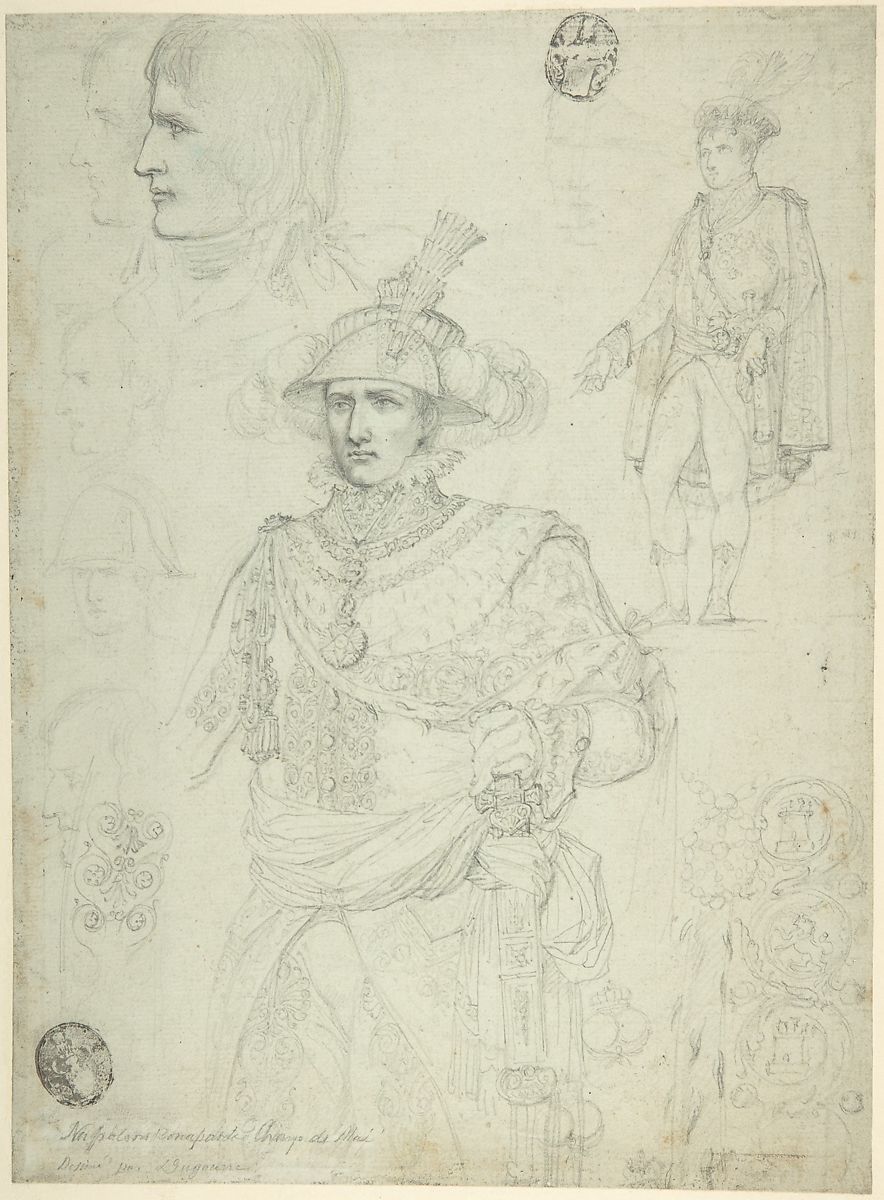
Az 1815-ben a „világ általános ellenségének és felforgatójának” kinyilvánított Napóleon.
Napoleon who was declared in 1815 “the general enemy and the disturber of the world”.
Portretul lui Napoleon, declarat în 1815 „inamicul general și peturbatorul lumii”.
Napoleon, der 1815 als „der generelle Feind und der Störer der Welt” erklärt war.
Kép forrása/Photo's source/Sursa fotografiei/Quelle der Photo:
conf. univ. dr. Hahner Péter egyetemi docens |
(DE) Am 9-ten Juni 1815 unterschriebten die Vertreter der europäischen Mächte den Dokument, das den Wiener Kongress beendete.
Die Kriege und Eroberungen der französischen und napoleonischen Zeit verwüsteten Europa und der Kongress versuchte den Erdteil eine neue Richtung geben, aber es konnte die vor 1789 existierte Beziehungen nicht wiedererstellen.
Einge Staaten (z. B. die Schweiz, beziehungsweise das Großherzogtum Toskana mit dem Habsburger Ferdinand III als Herrscher) waren wiederherrgestellt, andere (Heiliges Römishes Reich, Polen und der Republik Venedig) waren wieder im ehemailgen Zustand nicht versetzt. Es gibt auch neue politische Einheiten (Deutscher Bund und Königreich Lombardo-Venetien).
Das Dokument enthaltete auch der Vertrag, der die Skalverei verurteilt.
Am 13-ten März war Napoleon, der 1814 nach Elba verbannt war und in Zwischenzeit nach Frankreich zurückgekehert wurde, als „
der generelle Feind und der Störer der Welt” erklärt. Seine Frau, Marie-Louise von Österreich war als Herzogin von Parma un Piacenza erkannt (Art. 99). Das bedeutet, dass der Enklel und die Schwiegertochter des letzten Bourbon Herzoges von Parma, der dort geherrscht hatte, mussten sich mit dem kleinen Herzogtum Lucca zufriedengeben, das auf die Küste des Tyrrhenischen Meeres liegte.